
Rheumatology Gaborone, Botswana
Rheumatoid Arthritis
An autoimmune condition where the immune system attacks the joints causing pain, swelling, and stiffness. Early diagnosis by a specialist can prevent permanent joint damage.
Concerned about your symptoms?
What is Rheumatoid Arthritis?
An autoimmune condition not ordinary "wear and tear"
Rheumatoid Arthritis (RA) is a chronic autoimmune disease. Unlike osteoarthritis, which results from wear and tear over time, RA occurs when the immune system mistakenly attacks the lining of your joints the synovium causing inflammation, pain, and swelling.
Left untreated, this persistent inflammation can damage cartilage and bone, leading to permanent joint deformity. The good news: early diagnosis and the right treatment can stop this progression and many patients go on to live full, active lives with well-managed RA.
RA affects approximately 1% of the population worldwide, and about 75% of patients are women. It most commonly begins between the ages of 30 and 60, but can occur at any age.
“Early diagnosis and treatment opens a window of opportunity typically 3 to 6 months from onset during which the disease can be controlled before permanent joint damage occurs.”
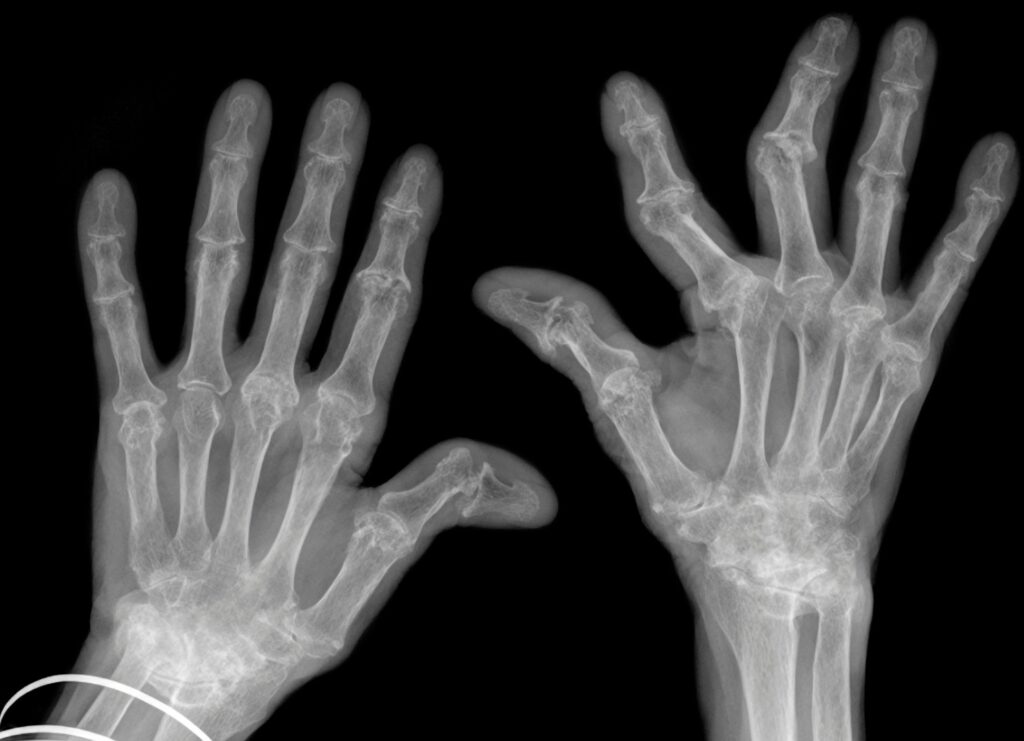
RA most commonly affects the small joints of the hands, wrists, and feet.
Recognising the Signs
Common symptoms of Rheumatoid Arthritis
RA symptoms vary from person to person and can come and go in flares. One of its most distinctive features is that it typically affects both sides of the body symmetrically both wrists, both knees, both feet.
Morning stiffness
Stiffness in and around the joints lasting more than 30 minutes after waking a hallmark of inflammatory arthritis.
Swollen, warm joints
Joints that appear swollen, feel warm to the touch, and are tender commonly the fingers, wrists, knees, and toes.
Fatigue
Persistent tiredness that feels disproportionate to activity caused by the body's ongoing inflammatory response.
Symmetrical involvement
Both sides of the body affected both hands, both wrists. This symmetry helps distinguish RA from other joint conditions.
Rheumatoid nodules
Rheumatoid nodules Firm lumps under the skin near affected joints most commonly around the elbows in some patients.
Systemic symptoms
RA can affect the whole body including the eyes, lungs, heart, and skin not just the joints.
If you have been experiencing joint pain and stiffness for more than 6 weeks especially with morning stiffness you should see a rheumatologist. Waiting too long risks unnecessary joint damage.
Getting a Diagnosis
The first step is a specialist assessment
Diagnosing RA accurately requires more than a blood test. It takes a specialist who can examine your joints, review your full history, and interpret clinical findings and investigations together ruling out other conditions that can look similar.
At RheumaMed, your first consultation with Dr. Rukarwa is dedicated to building that full picture. You will leave with a clear understanding of what is happening and a plan.
Early diagnosis is critical in RA. The sooner treatment begins, the better the long-term outcome for your joints. If you have had symptoms for more than six weeks, do not wait.
What to bring to your first appointment
- Any previous blood test results, especially if RF or ANA has been checked
- Previous X-rays or imaging of affected joints
- A list of current medications
- A note of when symptoms started and how they have changed
- Your GP referral letter if you have one

Your first consultation is a comprehensive specialist assessment not a rushed appointment.
Treatment & Management
RA is treatable and the earlier, the better
There is no cure for RA, but with the right treatment most patients can achieve remission or very low disease activity protecting their joints and living full, active lives. Treatment has advanced significantly in recent years.
What your treatment looks like depends on which joints are affected, how active the disease is, and how your body responds. Dr. Rukarwa will build a plan specifically around you not a generic protocol.
The goal is always the same: stop joint damage before it happens, and keep you moving.
The most important step you can take right now is to get assessed. Treatment cannot be tailored until the diagnosis is confirmed and the extent of your disease is understood.

With the right treatment, most patients with RA can stay active and live well.
Think you may have Rheumatoid Arthritis?
Other Conditions We Treat
Lupus (SLE)
Dr. Rukarwa’s specialist focus expert diagnosis and long-term management of lupus.
Osteoarthritis
Practical, evidence-based care to ease pain and keep you moving tailored to your joints and your life.

View All Conditions
We also treat ankylosing spondylitis, gout, and general internal medicine conditions.